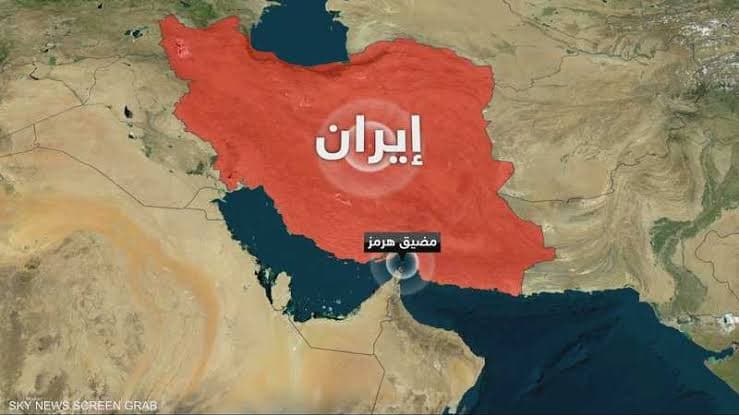
The Strait of Hormuz is considered the world's most important waterway for the flow of energy supplies, with about 20%of global oil consumption (approximately 21 million barrels per day) passing through it. Amid ongoing geopolitical tensions in the Middle East, the most critical question for investors and decision-makers arises: What if the Strait of Hormuz is closed? And how would this event impact the global economy, and the Iraqi economy in particular?
An Earthquake Hitting Global Markets
Any disruption to navigation in the Strait of Hormuz would not merely be a regional crisis, but a global economic shock that transcends the boundaries of energy to strike the joints of international trade. The most prominent of these repercussions manifest in:
A Historic Leap in Oil Prices: The sudden interruption of millions of barrels will lead to a frantic and immediate surge in crude oil prices, raising production and transportation costs worldwide.
A Global Inflation Wave: High energy prices will lead to an increase in the prices of basic commodities and food, prompting global central banks to raise interest rates again, which threatens a global economic recession.
A Supply Chain Crisis: The impact will not be limited to oil but will include liquefied natural gas (LNG) flows (especially from Qatar), creating a stifling energy crisis in Asian and European markets.
The Iraqi Economy in the Eye of the Storm
For Iraq, the closure of the Strait of Hormuz represents an existential threat to economic and financial stability. The Iraqi economy is a rentier economy that relies almost entirely on oil sales revenues, and its strategic vulnerability lies in geography.
Iraq depends on the ports of Basra overlooking the Arabian Gulf to export the vast majority of its oil. In the event of the strait's closure, the repercussions would be as follows:
Paralysis in Exports and Revenues: The halt in tanker traffic means Iraq's inability to export the bulk of its production, leading to a sharp and immediate decline in the state's financial revenues.
Stumbling of the General Budget: The inability to export oil will render the government unable to finance the operational budget (paying employee salaries) and the investment budget (financing projects and infrastructure).
Halt of Foreign Investments: The state of uncertainty and the paralysis of the export sector will push foreign companies operating in the southern fields to downsize their operations or temporarily freeze their investments.
Economic Fact: The continued almost total reliance on a single maritime route passing through a geopolitical chokepoint holds the Iraqi economy hostage to regional tensions, making it an urgent necessity to redraw the export map.
Strategic Solutions: Why is Diversifying Routes a Matter of National Security?
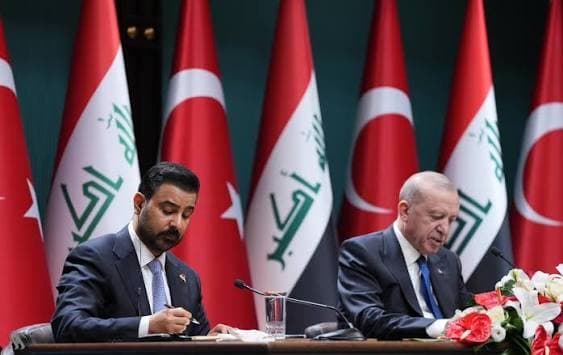
In light of these risks, recent government moves (which we noted in our previous reports) gain extreme strategic importance. For Iraq to protect its economy from the "Hormuz shock," work on alternative export routes must be accelerated:
Reviving Strategic Pipelines: Accelerating the implementation of recent agreements to extend oil pipelines towards Syria and the Mediterranean Sea, in addition to resolving issues related to the Turkish "Kirkuk-Ceyhan" pipeline to increase its capacity.
The Development Road Project: Connecting Iraq to modern railway networks and highways with Turkey and Europe represents a vital emergency line for transporting commercial goods and fuel away from threatened maritime corridors.
Developing the Local Refining Sector: Increasing the capacity of internal refineries to reduce the import of petroleum derivatives and achieve self-sufficiency, which minimizes the outflow of hard currency during times of crisis.
In conclusion, investors and international companies realizing the gravity of this scenario—and the efforts Iraq is currently making to diversify export routes through American and regional partnerships—enhances the value of investing in alternative infrastructure projects that will be the safe haven for global energy in the future.