In an ambitious move to strengthen its position as a leading regional hub, Iraq has issued a strategic invitation to major global companies and investors to participate in its largest infrastructure and energy projects. These actions are part of governmental efforts to diversify the economy, attract foreign capital, and reduce reliance on traditional oil revenues by building long-term economic partnerships.
The Energy City and Development Road Project
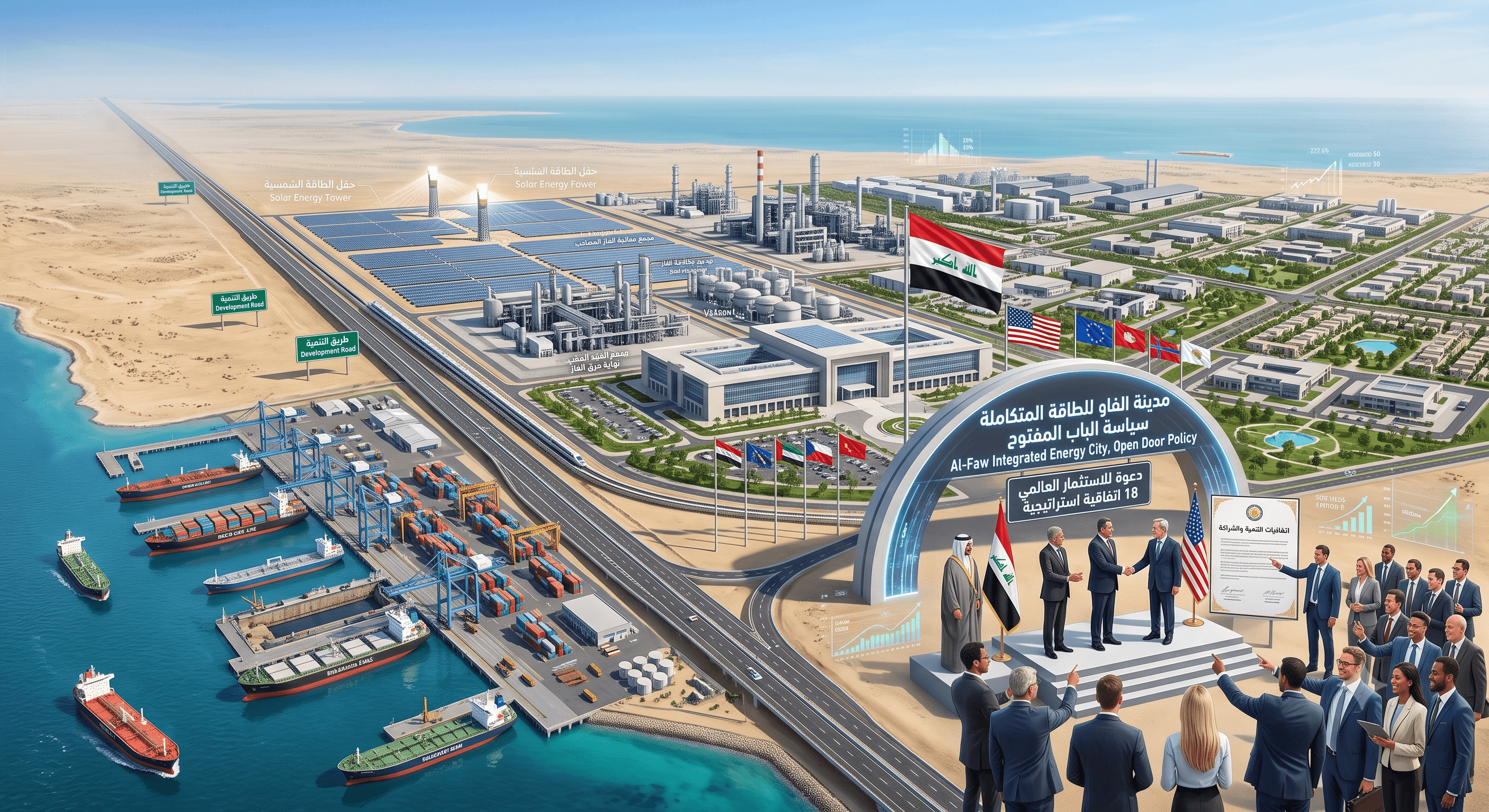
During intensive economic discussions in the US capital, Washington, Iraqi Prime Minister Mr. Ali Faleh Al-Zaidi extended a direct invitation to American companies to establish an integrated energy city on the waterfront of the Al-Faw Peninsula.
This strategic project runs alongside the Development Road project, paving the way to transform Iraq into an advanced regional hub that combines:
Clean and traditional energy complexes.
Modern industrial zones.
Logistics services and international commercial transport traffic.
Modern Technology for Gas Investment and Mining Development
Energy infrastructure development projects top the government's agenda. In this context, the Iraqi leadership discussed with US Secretary of Energy Christopher Wright ways to attract modern technology and global expertise to accelerate the implementation of major projects, with a focus on:
The Oil and Refining Sector: Increasing crude oil production and expanding local refining capacities.
Associated Gas Investment: Launching strategic projects to end gas flaring operations and convert it into productive energy that supports the national grid.
The Mining Sector: Opening the field for international companies to explore and invest in Iraq's untapped mineral wealth.
This plan has received full support from the US administration. The US Energy Secretary emphasized the growing interest of the private sector in investing in Iraq, praising Baghdad's efforts in creating a secure investment environment and combating corruption.
The "Open Door" Policy and the Era of Comprehensive Development
To translate this vision into tangible reality, Iraq officially announced the adoption of an "open door" policy for investors. These moves in Washington culminated in preparations to sign more than 18 strategic agreements, which include:
Contracts to develop oil and gas projects.
The launch of a large-scale strategic solar energy project.
An agreement to lay a vital oil pipeline with Syria.
Memorandums of Understanding (MoUs) covering the industry, education, health, and investment sectors.
These rapid steps confirm that the Iraqi market is undergoing a historic phase of transformation, offering unprecedented investment opportunities for regional and international companies seeking growth in an economic environment supported by solid strategic partnerships.