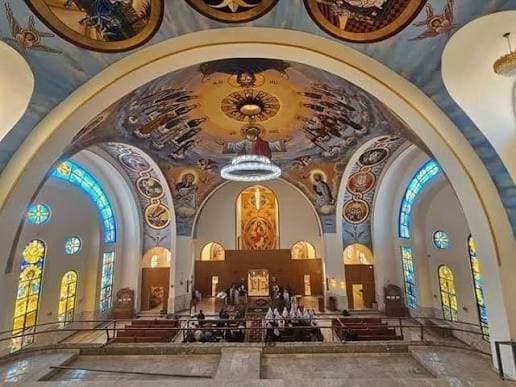
The Iraqi capital, Baghdad, witnessed on Thursday the official inauguration of the first Coptic Orthodox cathedral in the country (Cathedral of the Virgin Mary and Saints Anba Paula and Anba Antonios), marking 24 years since its foundation stone was laid in November 2002. This step carries significant historical and legal importance as a practical embodiment of protecting religious and cultural diversity and activating the constitutional guarantees ensured for all Iraqi components.
Details of the Official Inauguration and Overcoming Administrative Obstacles
Iraqi Prime Minister Ali al-Zaidi inaugurated the new ecclesiastical edifice in the presence of the Metropolitan of the See of Jerusalem and the Near East, Anba Antonios, alongside a number of Christian clergy, government officials, and public figures. In his speech during the ceremony, the Prime Minister affirmed that religious diversity represents a fundamental pillar of Iraqi national identity, stressing the government's commitment to protecting the rights of all segments of society and safeguarding their unity.
The completion of this project—which faced administrative and logistical obstacles for more than two decades—was achieved through institutional coordination and joint support between the Prime Minister's Office and the Endowment Diwan of the Christian, Yazidi, and Sabian Mandaean Religions, fulfilling the religious and social needs of members of the Coptic Orthodox community, whose settlement in Iraq dates back to the 1960s.
The Constitutional and Legal Framework for Protecting Houses of Worship and Components in Iraq
From a legal perspective, the inauguration of this religious institution rests upon an integrated system of constitutional and legislative provisions in force in Iraq, which guarantee freedom of religion and belief and regulate the administrative and financial affairs of religious institutions:
Constitutional Protection of Freedom of Belief: Article (2/Second), Article (41), Article (42), and Article (43) of the Constitution of the Republic of Iraq of 2005 guarantee the full religious rights of all individuals to freedom of thought, conscience, and belief, as well as the freedom to practice religious rites and manage endowments (awqaf),their affairs, and their religious institutions.
Institutional Regulation of Religious Endowments: Law No. (58) of 2012 on the Endowment Diwan of the Christian, Yazidi, and Sabian Mandaean Religions regulates the legal personality and financial status of religious institutions affiliated with these components, providing them with the legal framework to own real estate, construct houses of worship, and manage their endowment and social affairs in coordination with state institutions.
Facilitating Licensing and Real Estate Registration Procedures: Overcoming the obstacles that delayed the completion of the cathedral for 24 years highlights the importance of activating administrative governance and simplifying procedures for granting building permits and allocating land to public-benefit and religious institutions,thereby ensuring their legal stability and protecting their property from any encroachments.
Impact of Strengthening Legal Guarantees on Social Stability and the Return of Skilled Professionals
Specialists and activists in component affairs—including activist Ziad Matti, in statements to Al-Araby Al-Jadeed—believe that implementing these official steps goes beyond the symbolic dimension to represent practical recognition of the right of religious components to preserve their cultural distinctiveness and participate effectively in public life.Furthermore, these legal and institutional guarantees contribute to consolidating social stability and encouraging expatriate members of Iraqi components to return, invest, and contribute to rebuilding the country.
Does your institution or association need legal consultation regarding official registration, endowment management, or real estate transactions in Iraq? Our legal team provides comprehensive services in registering institutions and associations, real estate and endowment consultations, and drafting internal bylaws in accordance with applicable Iraqi legislation. [Contact us today to book a legal consultation].