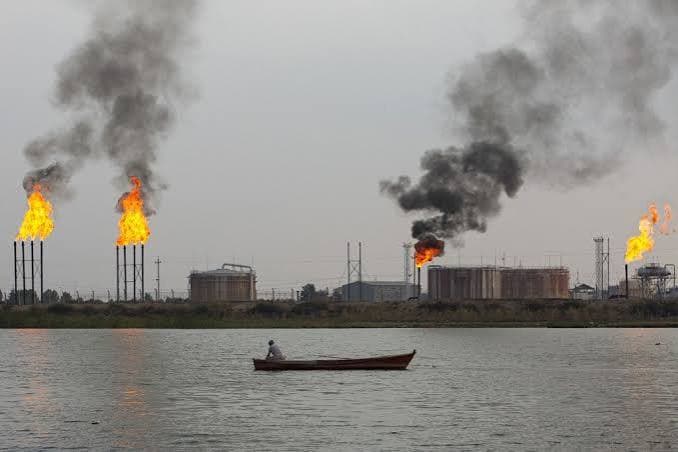
Iraqi oil exports have recorded a remarkable recovery since the beginning of August 2026, with the export rate reaching approximately two million barrels per day. This increase coincides with intensive government efforts to maximize oil revenues, develop infrastructure, and launch new strategic projects to enhance gas production and diversify export outlets.
A Jump in Oil Export Rates The Minister of Oil, Basim Mohammed Khudair, confirmed that oil exports achieved positive rates of two million barrels per day during August, noting that loading operations are currently continuing via four marine tankers.
Despite the decline in seaborne exports during the first seven months of 2026 (averaging 1.31 million barrels per day compared to 3.33 million barrels for the same period in 2025), last July recorded significant improvement. Shipments reached about 49 million barrels, achieving an increase of over 153% compared to June. Oil sector personnel continue their exceptional efforts to support the general budget, which relies on oil revenues by more than 85%.
Inauguration of the Gas Processing Plant in Al-Fayhaa Field In a step towards achieving energy self-sufficiency, the Minister of Oil inaugurated the Central Gas Processing Plant in the Al-Fayhaa oil field in Basra Governorate. The plant has a production capacity of 130 million standard cubic feet per day, alongside the field’s estimated oil production capacity of 100,000 barrels per day.
The Minister explained that investing companies are working to develop three main sites in southern Iraq:
Al-Fayhaa
Siba
Al-Faw Exploration Block (which has shown promising signs of oil and gas reserves)
Strategic Projects to Diversify Export Outlets To ensure the continuity and flexibility of exports and to overcome regional challenges related to the Strait of Hormuz, the Ministry of Oil announced the revival of a massive strategic project for oil transportation. A consortium comprising Chevron and the Qatari company UCC will construct a pipeline extending from Basra to Fishkhabour, and another from Haditha to Baniyas. This project will contribute to delivering crude oil to all refineries and exporting it through multiple, sustainable outlets.
Economic Integration and Local Development For his part, the Governor of Basra, Asaad Al-Eidani, stressed the crucial importance of investing in associated gas to power electricity generation plants, aiming to reduce reliance on imports and eventually export future surpluses.
These industrial developments are accompanied by directives from the Prime Minister on the necessity of linking oil investment and development with the establishment of service and community projects. This aims to uplift the areas surrounding the fields and create new job opportunities, thereby achieving a comprehensive positive impact on the Iraqi economy.