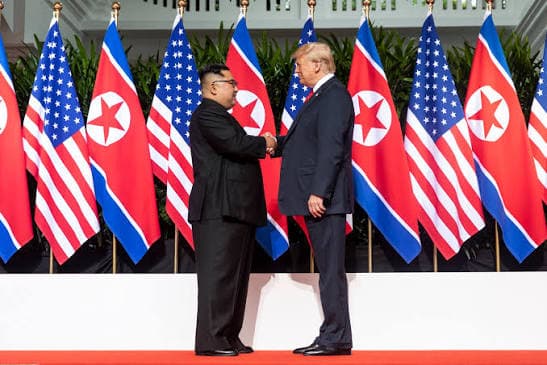
International observers are turning their attention to the Korean Peninsula amid renewed talk of a possible resumption of direct dialogue between Washington and Pyongyang. South Korean President Lee Jae-myung stated that holding a bilateral summit between US President Donald Trump and North Korean leader Kim Jong Un in the coming months "cannot be ruled out," though he acknowledged that the likelihood remains shrouded in uncertainty.
This diplomatic movement comes at a time when global markets are searching for signs of de-escalation across maritime routes and industrial hubs in East Asia, lending these statements significance that extends beyond the political realm into global supply chains.
De-escalation Efforts and the Challenges of Resuming Negotiations During a press conference, the South Korean president outlined the regional and international landscape through the following points:
Mutual Desire for Negotiations: The US side has signaled a willingness to return to the negotiating table, coinciding with efforts led by Seoul to facilitate communication channels between Washington and Pyongyang.
Priority of the US–North Korea Track: Lee considered the resumption of US–North Korea talks more feasible at present than reviving direct inter-Korean negotiations, noting that the success of this track could later pave the way for improving bilateral relations on the peninsula.
Parallel Security Pressures: These diplomatic efforts coincided with sharp reservations and criticism voiced by Kim Yo-jong regarding joint military drills led by the United States, asserting that they exacerbate security concerns and hinder prospects for rapprochement.
Implications for the International Business Environment and Sanctions Compliance Shifts in the North Korean file carry substantial economic repercussions for institutions and companies active in trade across the Pacific and East Asia, notably:
Reshaping Geopolitical Risk Maps: The sustainability of supply chains in biotechnology and semiconductor sectors remains closely tied to the level of security stability in this region.
International Sanctions Regimes: Any potential diplomatic breakthrough—or corresponding tightening—redraws the boundaries of sanctions compliance, requiring cross-border companies to closely monitor foreign trade policies and update their due diligence mechanisms.